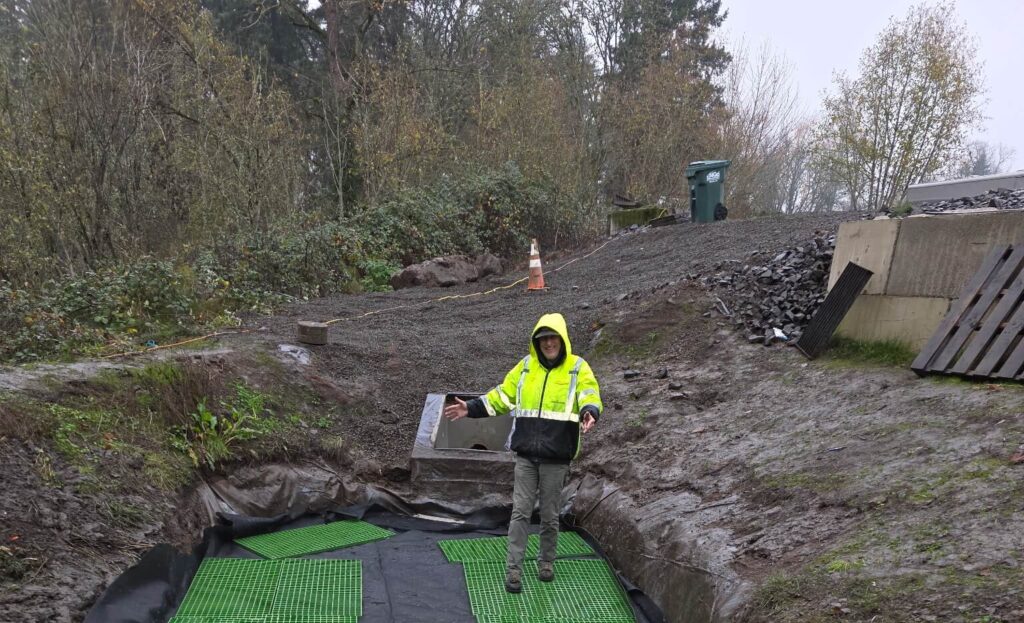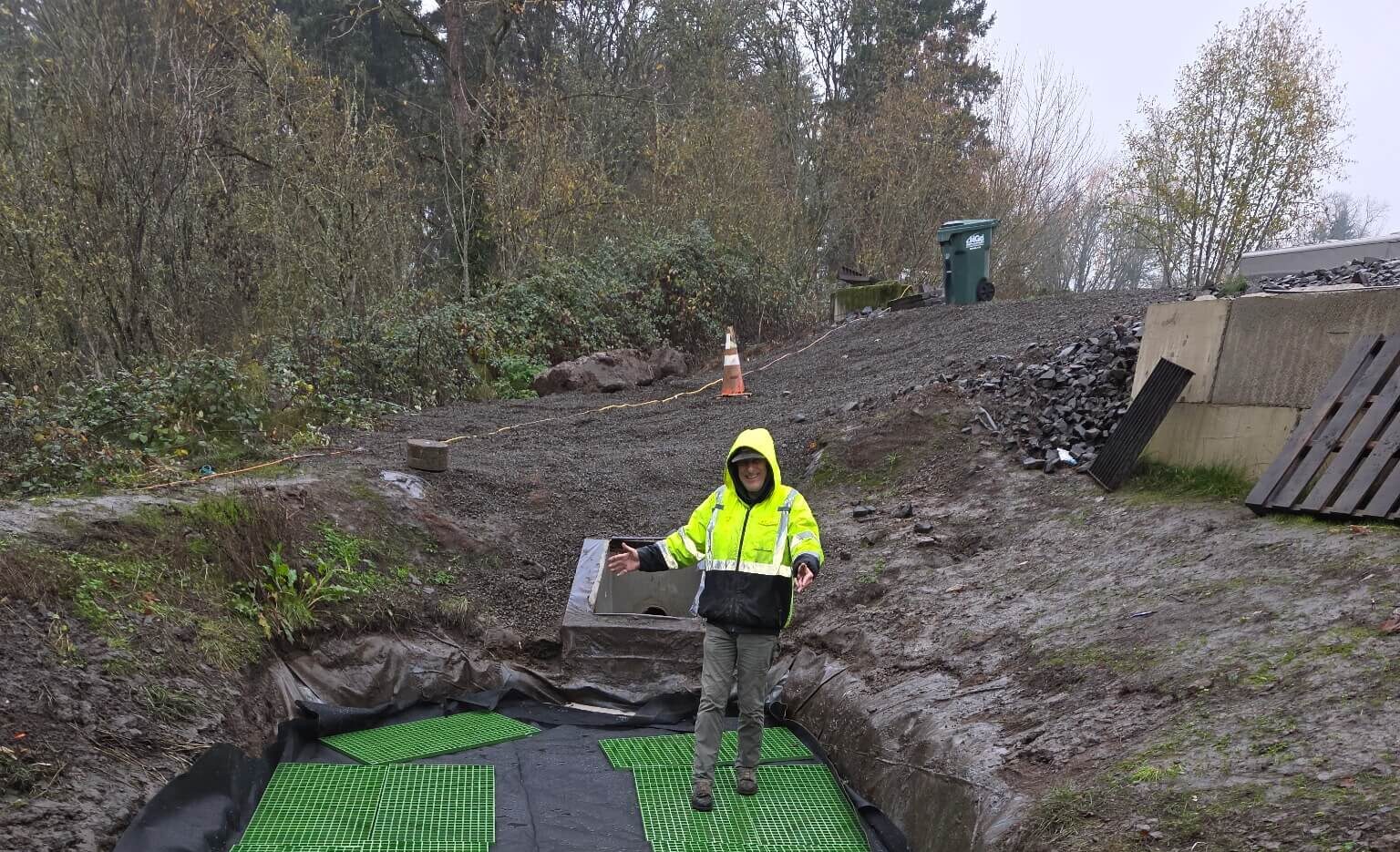
Industrial Stormwater at a Waste Transfer Facility: The Starting Conditions
An industrial waste transfer facility in Oregon sits at the intersection of heavy vehicle traffic and stormwater regulation. Every rain event is a collection event — brake dust, tire fines, debris from truck undercarriages, and residue from galvanized roofing migrate across the facility surface and concentrate in the detention pond. From there, there’s one way out: the stormwater outfall.
The detention pond started life as a burn pit. That detail becomes relevant quickly.
The First Biochar Stormwater Filter: What Worked and Why
About fifteen years ago, Gullywasher designed and installed a small biochar filter inside the existing stormwater collection structure at the end of that pond. Modest in size. It exceeded expectations. It brought the site back into compliance.
Deferred Maintenance, a Bad Redesign, and a Stormwater System Still Out of Compliance
The filter media didn’t get replaced on schedule. Now out of compliance, the site’s new environmental consultant made a decision: don’t fix the filter — remove it entirely. Redesign and expand the detention pond with a new liner instead.
It was expensive. It was also still out of compliance.
The consultant proposed a replacement stormwater filter roughly thirty times the size of the original biochar system and submitted the design to the Oregon Department of Environmental Quality for approval.
Then the company got sold.
Starting Over: What the ODEQ-Approved Design Actually Called For
The incoming general manager had been promoted from within. He knew the site. He knew the history. He didn’t have a high opinion of what the previous consultant had produced — and he happened to be the same person who had been Gullywasher’s original contact on the first biofilter install fifteen years earlier.
He called us.
It was too late in the season to change course entirely, so we referred him to three qualified consultants who could shepherd the ODEQ approval process. That consultant confirmed what the approved design required: a 504-gallon-per-minute biofilter built inside the detention pond, matched to the existing outlet structure.
We designed and built it.
Demolition, Core Drilling, and 28 Cubic Yards of Filter Media
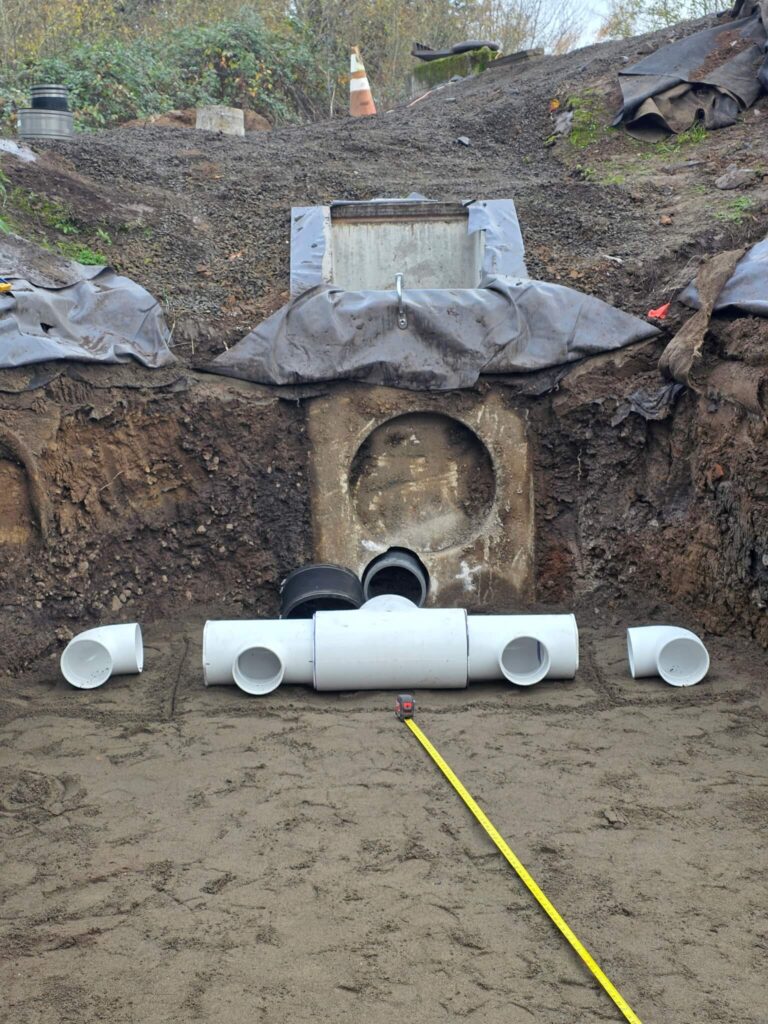
We waited for four consecutive days of clear weather in late fall. When the forecast gave us the window, we moved.
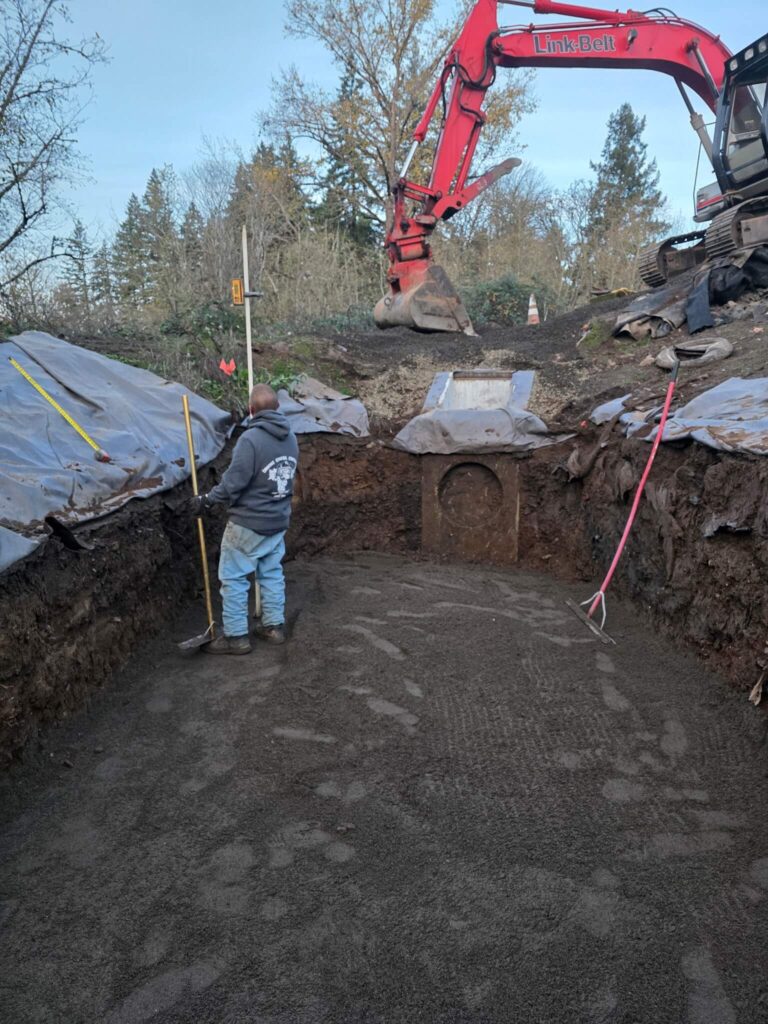
Demolition and excavation came first. A demolition subcontractor excavated approximately 80 cubic yards of dirt, muck, and historical burn pit debris from above the liner — some of it studded with broken glass and railroad spikes embedded in the walls.
Core drilling followed. A second subcontractor cored a 12-inch hole through the concrete outlet structure, hitting the floor inside precisely. We sealed a pipe into it.
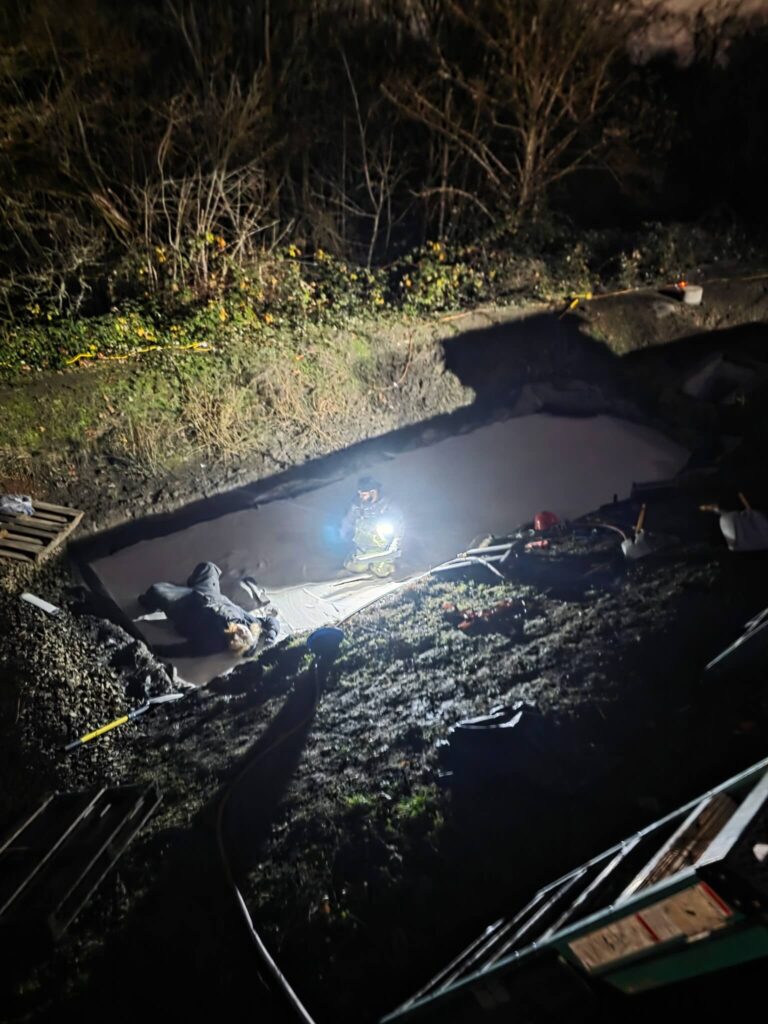
Liner placement was the puzzle. The excavated pit had ragged walls, no straight edges, and glass and spikes throughout. A new filter liner was positioned into that irregular space, then the existing liner sections were dropped back over it to direct stormwater flow directly into the filter bed.
System build came last. The sequence:
- A four-column French drain feeding into a pipe header connected to the cored outfall
- Twenty-eight cubic yards of stormwater filter media loaded in sequence — quartz gravel over the collection pipes, biochar mix compacted in small batches, quartz sand as a protective cap
- Filter screen and industrial FRP grates on top, engineered so future maintenance requires a worker with a shop vacuum, not a crew with a backhoe
- Check dams installed upstream to slow incoming flows and deliver consistent, manageable volume into the filter
We finished past sundown. Liner work doesn’t get to pause.
Documented ODEQ Stormwater Compliance — and a System Staff Can Actually Maintain
Regulatory status: Stormwater treated before it leaves the site. Documented, defensible compliance submitted to ODEQ.
Maintenance protocol: Executable by any member of the facility’s existing staff.
Installed cost: Came in at roughly what the previous consultant had quoted for project management fees alone.
What Industrial Stormwater Compliance Actually Requires
Regulatory exposure doesn’t announce itself. It accumulates — through deferred maintenance, consultant decisions made without site history, and ownership transitions that reset institutional knowledge.
The question isn’t whether a compliance problem exists. It’s whether you find it before the agency does.