

Zinc and Copper in Your Stormwater? Get Back to Benchmark.
A benchmark exceedance doesn't have to mean a costly retrofit. Gullywasher's biochar-based filtration systems have helped industrial facilities across the Pacific Northwest reduce zinc and copper to permit-compliant levels — passively, without chemicals, active systems, or major capital expense.
Up to 97.9% Zinc Removal — Lab Verified
Third-party analytical data from the Portland Postal Distribution Center shows consistent zinc reduction across all seasons. Read the full case study.
view the Portland Postal case studyWhere Is the Zinc Coming From?
Zinc and copper show up in stormwater sampling results for predictable reasons. Identifying the source is the first step toward a cost-effective BMP — and in most cases, a targeted passive filter at the right point in your drainage system is all it takes to bring discharge levels below your permit benchmark.

Galvanized Roofing & HVAC
As zinc-coated steel ages, every rain event washes dissolved zinc off the surface. Roof runoff from a galvanized building typically contains 1–6 mg/L of zinc — anywhere from 10 to 50 times the Washington State benchmark of 0.117 mg/L. Galvanized HVAC equipment on rooftops contributes similarly. This is the most common source we see at industrial facilities under permit.
downspout biofilter solutions
Paved Areas & Tire Traffic
Tire dust is a significant contributor to zinc in stormwater — particularly at facilities with high vehicle turnover, tight turning radii, or forklifts running rubber tires. Loading docks, truck bays, and parking areas accumulate zinc-laden particulates that wash into catch basins with every storm event. Copper comes from brake dust and electrical components along the same pathways.
catch basin insert options
Galvanized Structures & Process Operations
Outdoor galvanized railings, fencing, structural steel, and process equipment shed zinc continuously. Metal fabrication, alloy processing, and semiconductor manufacturing generate dissolved copper and aluminum along with zinc. These sources often produce diffuse, site-wide contamination best addressed at outfalls or swale lines rather than individual downspouts.
filter sock & berm options
Know Your Benchmark
Under the EPA's Multi-Sector General Permit (MSGP) and most state industrial stormwater permits, zinc and copper concentrations in your discharge are measured against hardness-adjusted benchmarks. A single exceedance isn't automatically a permit violation — but it does trigger a corrective action requirement under your SWPPP. Repeated exceedances can escalate to enforcement.
Common benchmarks your facility may be subject to:
- Washington State: 0.117 mg/L total zinc | 0.014 mg/L total copper
- Oregon: 0.120 mg/L total zinc | 0.020 mg/L total copper
- California (NAL): 0.262 mg/L total zinc | 0.0332 mg/L total copper
- EPA MSGP: Hardness-dependent, typically 0.037–0.260 mg/L zinc
- Watch Out for TMDLs: which can lower benchmarks
Match Your Problem to the Right Solution
There's no single product that fits every site. The right BMP depends on where the zinc or copper is entering your drainage system. Here's how we typically approach the three most common scenarios.
Zinc from a Galvanized Roof → BioUP Upflow Downspout Biofilter
The 55-gallon and 275-gallon BioUP biofilters connect inline with individual downspouts and use a high-flow biochar media blend to adsorb dissolved zinc and copper before the water enters your drainage system. No power, no chemicals, no moving parts. Each unit is sized to a specific roof drainage area — use the guide below to select the right unit, or contact us for a site-specific recommendation.
| Roof drainage area | Recommended unit |
|---|---|
| Up to ~3,500 sq ft per downspout | 55-gallon BioUP |
| Up to ~10,000 sq ft per downspout | 275-gallon BioUP |
| Multiple combined downspouts / complex chemistry | 275 Dual-Stage Upflow |
Zinc & Copper at Catch Basins or Outfalls → MetalCompliant Catch Basin Insert
Our MetalCompliant inserts fit frame-mounted or basket-style into existing catch basins and use a layered media configuration to remove dissolved zinc, copper, lead, nickel, and other heavy metals at the point of capture. Lab data from the Portland Postal Distribution Center shows up to 97.9% zinc removal and 85.3% copper removal across multiple seasonal sampling events. Inserts are washable and reusable — not a single-use consumable.
Available in custom dimensions to fit non-standard infrastructure. Both frame-mounted and basket-style configurations include a MetalCompliant media liner. The basket-style includes a sliding sample pan for direct lab bottle collection.
explore MetalCompliant inserts
Diffuse Site-Wide Metals / Sheet Flow → Biochar Filter Socks & Berms
When zinc or copper contamination is distributed across a large area — typically facilities dealing with process operations, fabrication, or large outdoor footprints — filter socks and berms deployed in swales, along outfalls, or around catch basin inlets provide an effective, low-cost BMP. Our fast-flow biochar blend is specifically formulated for dissolved metals removal in high-volume, no-residence-time applications. Custom-sized biochar pillows are available for non-standard outfall configurations.
Filter socks can be deployed immediately as an interim corrective action while a more permanent system is engineered — useful when you're on a compliance clock.
explore biochar filter socksTalk to a Stormwater Engineer Today
Benchmark exceedances move fast. Reach out by phone, email, or the form below — describe your site and your permit situation and we'll respond with a practical recommendation, not a sales pitch.
contact a stormwater engineerRelated Case Studies
See how Gullywasher has helped facilities across the Pacific Northwest achieve and maintain metals compliance.
explore all case studies
Portland Postal Distribution Center
97.9% zinc removal at a 10-acre industrial permit site in Oregon. Third-party lab data across three seasonal sampling events shows consistent metals reduction with MetalCompliant catch basin inserts.
read case study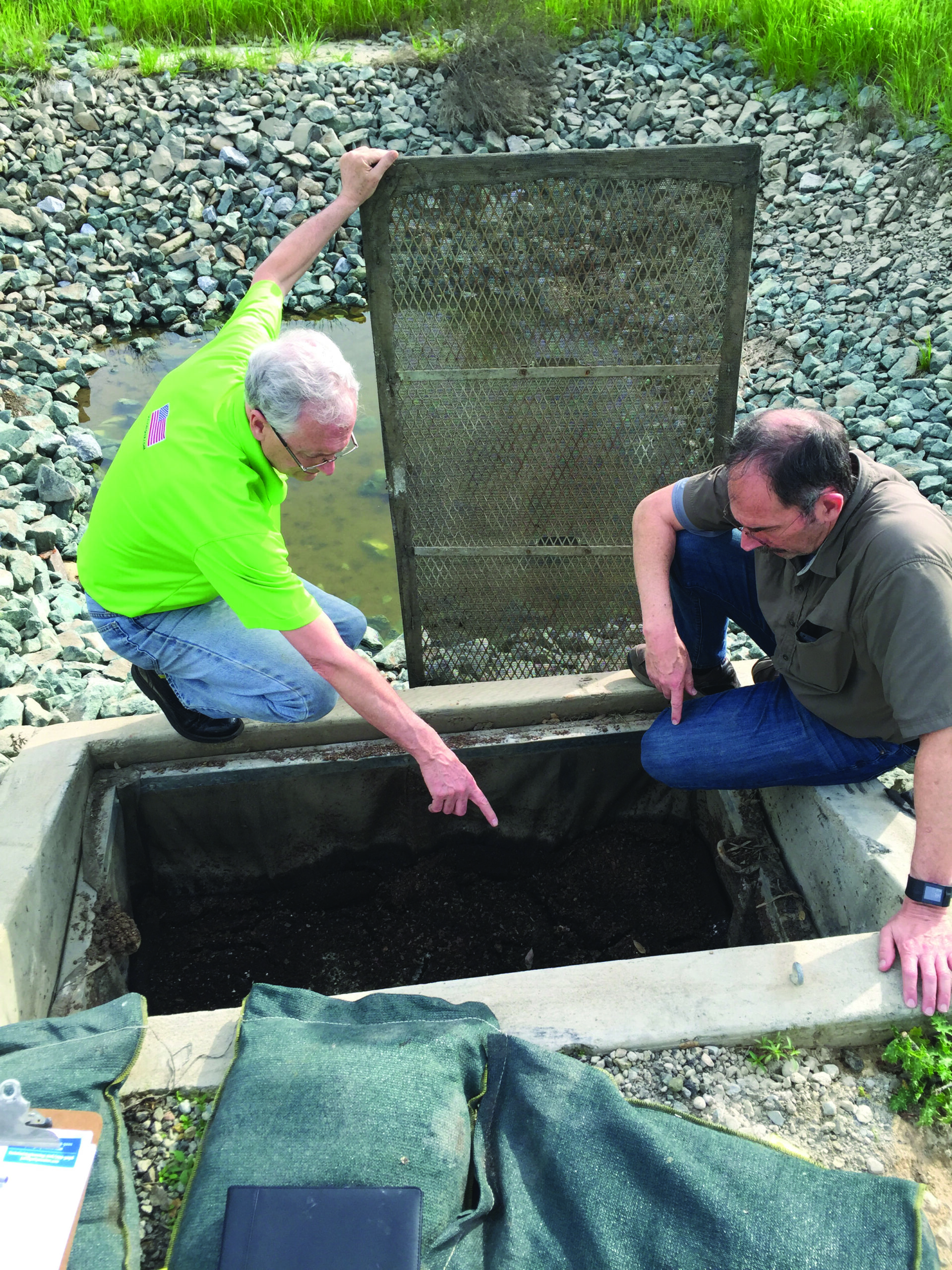
Berkeley Marine Center
Boatyard stormwater compliance in one of California's most scrutinized environmental jurisdictions. Metals, oils, and antifouling compounds addressed through a targeted multi-product approach.
read case study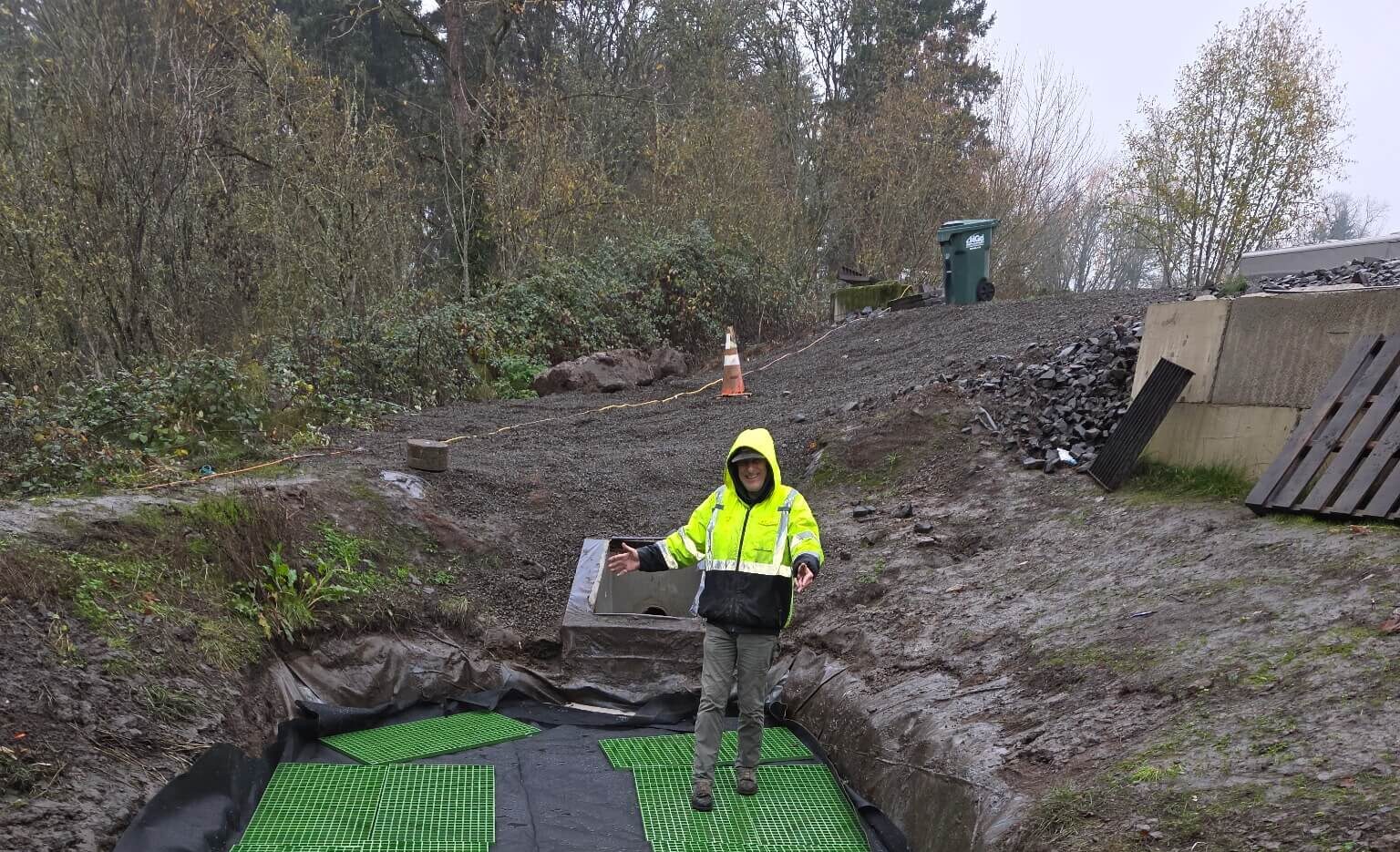
Oregon Waste Transfer Facility
Heavy vehicle traffic, galvanized roofing, and brake dust combined to produce consistent permit exceedances. A targeted biochar filter deployment brought the facility back to baseline.
read case study